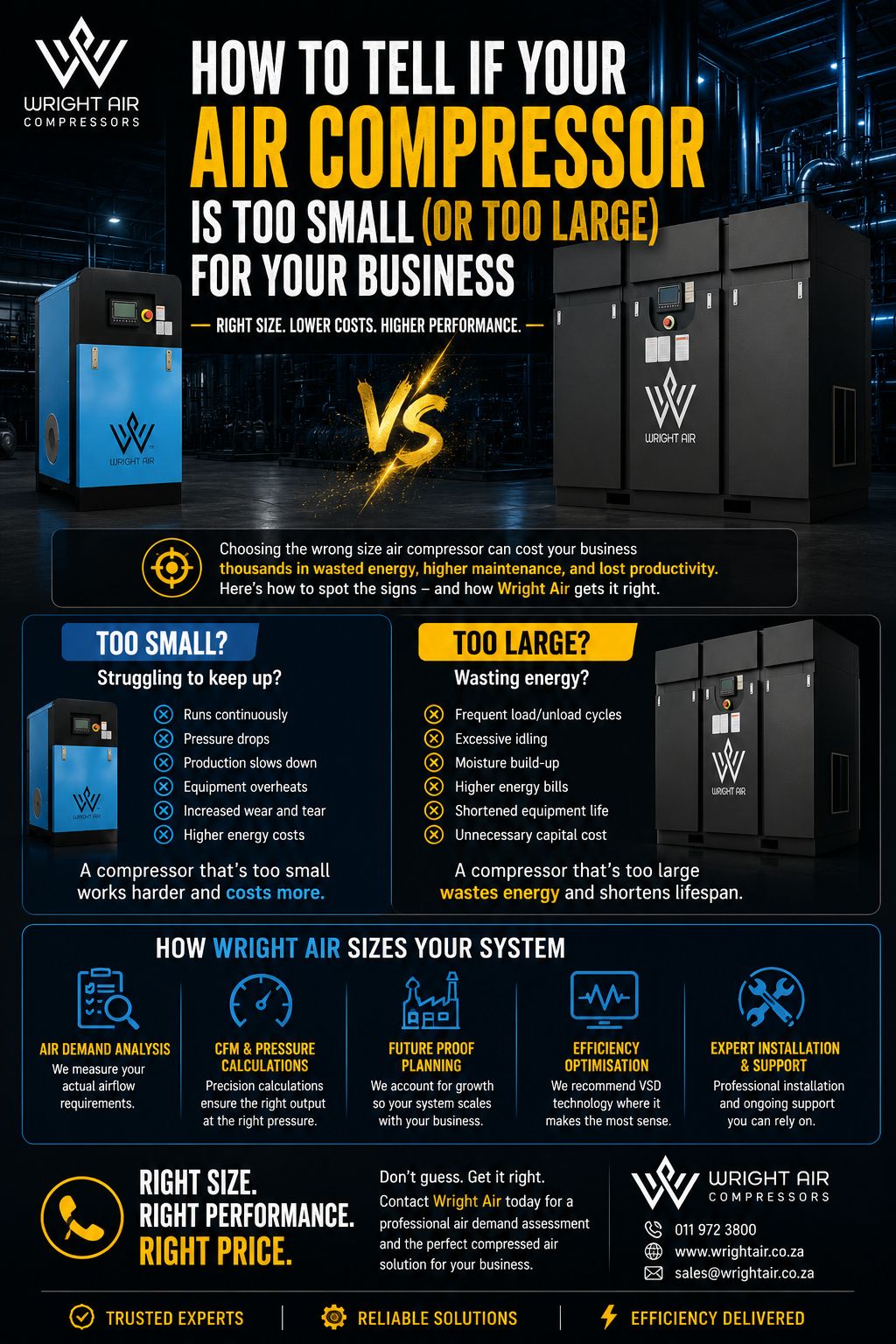
Choosing the correct industrial air compressor is one of the most important decisions a business can make. An incorrectly sized compressor can increase electricity costs, reduce productivity, shorten equipment life and create unnecessary maintenance expenses. Whether your compressor is too small or too large, the result is the same—lost efficiency and higher operating costs.
Why Compressor Sizing Matters
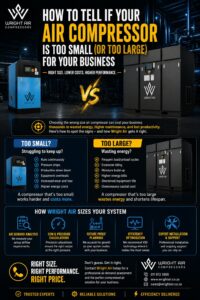
Compressor sizing is determined by airflow (CFM), operating pressure (bar), duty cycle and future production requirements—not simply motor size or horsepower. Matching the compressor to actual demand improves reliability while reducing energy consumption.
Signs Your Air Compressor Is Too Small
A compressor that is undersized often runs continuously, struggles to maintain pressure during peak demand, overheats, causes production delays and increases wear on internal components because it rarely reaches an efficient operating cycle.
Signs Your Air Compressor Is Too Large
Oversized compressors frequently load and unload, spend excessive time idling, consume unnecessary electricity and may experience moisture-related issues. Businesses also pay more in capital and maintenance costs than required.
The Hidden Cost
Compressed air is among the most expensive utilities in manufacturing. A poorly sized system can significantly increase electricity usage, filter changes, servicing requirements and unexpected downtime over the life of the equipment.
How Wright Air Gets It Right
Wright Air performs professional air demand assessments, analyses CFM and pressure requirements, considers future expansion and recommends the most suitable fixed-speed or Variable Speed Drive (VSD) solution for each application.
Real-World Example
A factory requiring 580 CFM that installs a 450 CFM compressor will experience pressure drops and continuous operation. Conversely, a factory needing only 220 CFM but installing an 800 CFM compressor will waste energy through inefficient cycling. Correct sizing avoids both scenarios.
Frequently Asked Questions
Can a compressor be too big? Yes.
Can it be too small? Absolutely.
The only reliable way to determine the correct size is through a professional air demand assessment that measures airflow, pressure and usage patterns.
Conclusion
Investing in the correct compressor size reduces operating costs, improves production reliability and extends equipment life. If you’re unsure whether your existing compressor is correctly sized, contact Wright Air for a professional compressed air assessment.
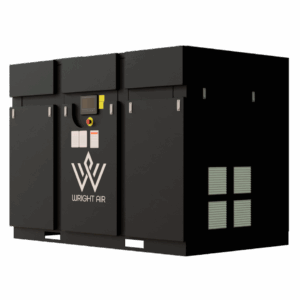
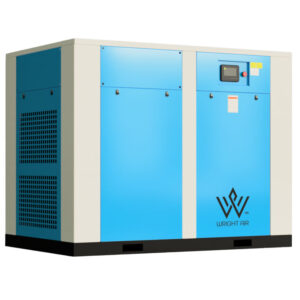
Two Stage Screw Compressors

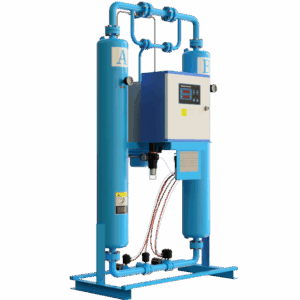

Desiccant Dryer
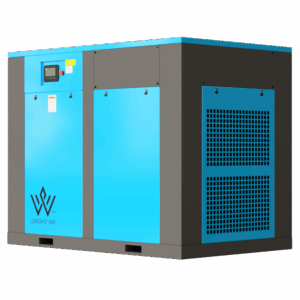
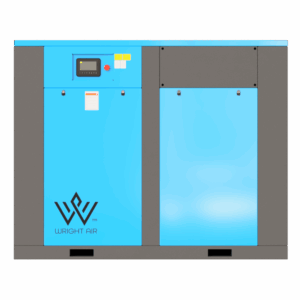
Screw Compressors
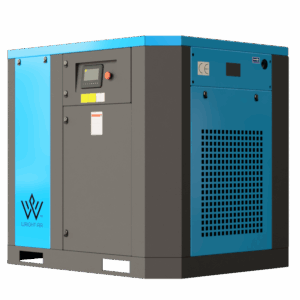

Screw Compressors
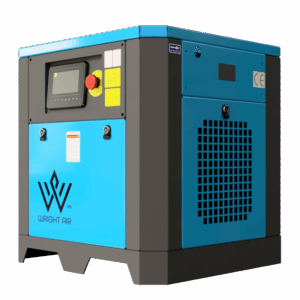

Screw Compressors

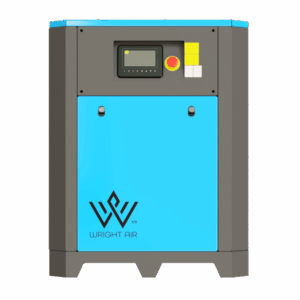
Screw Compressors