
The Air Looks Clean. Is It?
Compressed air is often treated as an invisible utility: switch on the compressor, maintain pressure and keep production moving. But pressure tells you very little about purity.
A system can deliver a steady supply of air at the correct pressure while carrying water vapour, liquid condensate, oil aerosols, oil vapour, rust or fine particles into a sensitive process.
The result may only become visible when a pneumatic valve starts sticking, a paint finish develops defects, an instrument fails or a batch needs investigation.
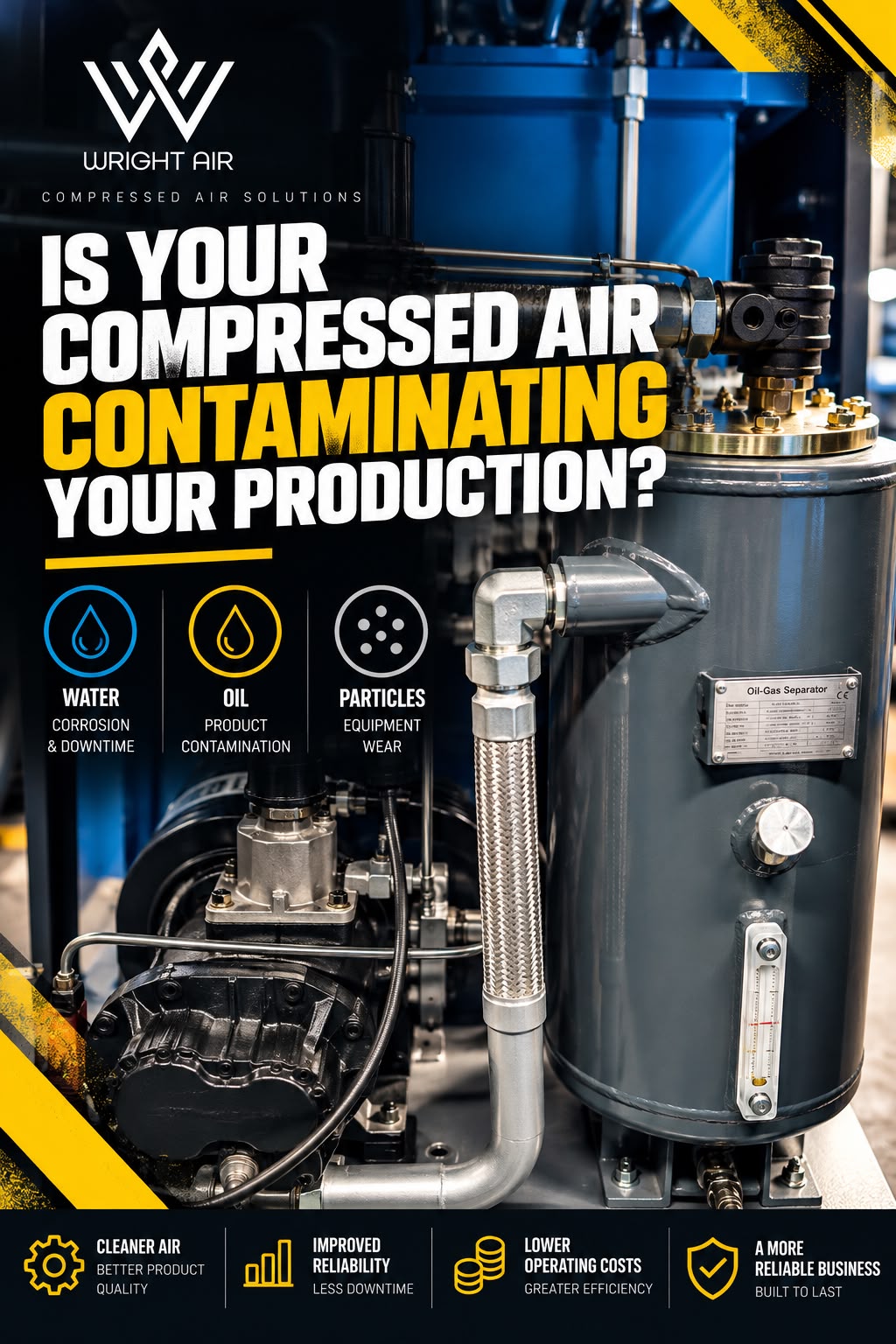
The important question is not simply whether a compressor is working. It is whether the entire compressed-air system delivers the quality required at the point where the air is actually used. That includes the intake environment, compression process, aftercooler, receiver, dryer, filters, distribution network and final point-of-use treatment.
This guide explains the contamination risks, the technologies used to manage them, how ISO 8573-1 specifications work and why effective air treatment is an engineering decision rather than a matter of installing as many filters as possible.
1. What Is Really Inside Compressed Air?
Every compressor draws in atmospheric air. That air naturally contains moisture and suspended particles, and industrial environments can add exhaust-derived hydrocarbons, dust and other pollutants. Compression does not make these contaminants disappear. As air cools after compression, some water vapour condenses; contaminants may also be introduced by compressor components and the distribution network.
It helps to separate the problem into three headline categories: particles, water and oil. These are the three contaminant groups classified by ISO 8573-1. Depending on the application, gaseous contaminants and microbiological contamination may also need specific assessment beyond those three headline classes.
Particles: Small Contaminants, Expensive Consequences
Particles can enter with intake air, develop through wear or originate from rust and scale in downstream pipework. A compressor intake filter primarily protects the compressor; it should not be assumed to deliver the final cleanliness needed by precision instruments, packaging equipment or sensitive production lines. A filter fitted in the compressor room also cannot prevent debris generated farther downstream.
Water: Vapour, Droplets and Condensate
Atmospheric air always carries some water vapour. When compressed air is cooled, its capacity to hold water vapour changes and liquid condensate can form. If water is not managed, it may corrode pipework, wash lubricant from pneumatic components, damage instruments and contribute to product or process problems. Water vapour requires drying; liquid water requires separation and drainage. Those are related but different jobs.
Oil: Liquid, Aerosol and Vapour
Oil-injected screw compressors use lubricant within the compression process and incorporate separation systems to minimise carryover. However, residual oil aerosol or vapour may still require downstream treatment for the intended application. Oil-free compressor designs do not inject oil into the compression chamber, but ambient air can still contain hydrocarbons. Neither technology removes the need to assess the final air-quality requirement.
2. The Hidden Cost of Contaminated Compressed Air
A contamination problem rarely appears as a single line item on an electricity bill. Its cost may be distributed across rejects, rework, unplanned stoppages, replacement parts, investigations and additional labour. The most significant cost depends on how the air is used.
- Product quality: Droplets, aerosols or particles can cause defects in painting, coating, packaging or direct-contact processes.
- Equipment reliability: Moisture and dirt can accelerate corrosion and cause valves, cylinders and instruments to malfunction.
- Downtime: A relatively small air-treatment fault can interrupt multiple production stations supplied by the same header.
- Maintenance cost: Clogged filters, faulty drains and contaminated components can generate recurring service work.
- Energy cost: Restrictive filters and poorly selected treatment equipment increase pressure loss and can force higher compressor discharge pressure.
- Quality assurance: Sensitive industries may require documented testing, traceability and corrective action when purity limits are exceeded.
A useful assessment therefore considers both the direct cost of treatment and the avoided risk to the process. The cheapest filter is not necessarily the lowest-cost solution, but neither is the most elaborate treatment train automatically justified.
3. Why a Dryer Alone Is Not Enough
A dryer is designed primarily to reduce water vapour and achieve a specified pressure dew point. It is not a universal device for removing oil vapour, fine particles or every form of liquid contamination. An effective system usually combines different treatment stages, selected according to the incoming contamination and the required outlet quality.
Aftercooler and Moisture Separator
Cooling compressed air encourages water vapour to condense. A downstream separator removes bulk liquid droplets, while a correctly functioning drain removes the collected condensate. A failed-open drain wastes compressed air; a blocked drain can allow liquid water to travel downstream.
Refrigerated Dryers
Refrigerated dryers cool the air to condense moisture and typically suit many general industrial applications. They are not automatically suitable for applications requiring very low pressure dew points, particularly where piping or equipment may be exposed to low ambient temperatures. Actual performance depends on inlet conditions, flow, pressure and the dryer’s rated operating envelope.
Desiccant Dryers
Adsorption or desiccant dryers can deliver lower pressure dew points where required. Their selection must account for regeneration energy or purge air, inlet oil and water protection, desiccant dust and the final air-quality target. Specifying an unnecessarily low dew point may create avoidable capital and operating costs.
Membrane Dryers
Membrane systems can be useful for selected flows and point-of-use duties. Their performance and purge-air requirements should be evaluated for the actual application rather than assumed to be interchangeable with refrigerated or desiccant drying.
4. The Filters That Do Different Jobs
The term “air filter” is too broad for an engineering specification. A particulate filter, coalescing filter and activated-carbon stage target different contaminants. They must be selected and positioned as a system.
| Treatment Stage | Primary Function | Important Limitation |
|---|---|---|
| Bulk liquid separator | Removes bulk condensed water and some liquid contamination | Does not remove water vapour or fine oil vapour |
| Particulate filter | Captures solid particles to its rated performance | Does not replace drying or vapour removal |
| Coalescing filter | Captures liquid aerosols, including oil and water droplets, and some fine particles | Not designed to remove oil vapour |
| Activated-carbon adsorber | Reduces oil vapour and certain odours | Needs appropriate upstream protection and planned replacement |
| Dryer | Reduces water vapour to a target pressure dew point | Not a substitute for every filtration stage |
| Sterile point-of-use filter | May provide microbial control in validated sensitive applications | Requires application-specific validation and maintenance |
The order of components matters. For example, a carbon adsorber can be overwhelmed by liquid oil if suitable coalescing protection is omitted. A desiccant dryer may need upstream oil-aerosol protection and downstream dust filtration. The exact arrangement must follow the manufacturer’s design guidance and site requirements.
5. Understanding ISO 8573-1 Without the Confusion
ISO 8573-1:2010 is the current published edition as of September 2026, with a revision under development. It classifies compressed-air purity separately for solid particles, water and total oil. The standard is a way to specify measurable quality, not a blanket guarantee that a particular compressor or filter will suit every application.
A specification is commonly written as ISO 8573-1 [A:B:C], where A represents the particle class, B the water class and C the total-oil class. The three numbers are separate requirements. A system may need particularly dry air without requiring the strictest oil class, or exceptionally low oil content without needing the lowest possible pressure dew point.
Class 0 is sometimes misunderstood. It does not mean that air contains literally zero molecules of oil. For the relevant contaminant, Class 0 is a user- or supplier-defined specification that must be more stringent than Class 1. Claims of Class 0 performance should identify the contaminant, defined limit, measurement conditions and supporting test or certification evidence.
Do not choose a purity class from a generic industry label alone. A food-packaging line, paint booth, instrument-air network and pneumatic workshop may have different exposure pathways, equipment sensitivities and contractual requirements. The point of measurement matters: air quality at the compressor discharge may not match air quality at a distant production machine.
6. Oil-Free Versus Oil-Injected: What Actually Matters?
Oil-injected screw compressors and oil-free compressor designs can both be appropriate industrial choices, depending on the application and the full treatment system. The key distinction is the way lubricant is used in compression, not a promise that the delivered air needs no further treatment.
Oil-injected machines use oil within the compression process and rely on internal separation and, where necessary, downstream treatment to achieve the specified outlet quality. Oil-free machines avoid injecting oil into the compression chamber, reducing one potential contamination source. But intake hydrocarbons, ambient particles, moisture and downstream pipework contamination still need consideration.
For contamination-sensitive operations, compare the complete installed solution: required purity class, verification method, compressor technology, filtration, drying, energy use, maintenance, redundancy and life-cycle cost. Where a supplier cites an oil-free or Class 0 claim, verify precisely what equipment and test conditions the claim covers.
7. Why Dirty Filters Can Increase Electricity Consumption
Every air-treatment component creates some resistance to flow. As particulate filters load with contaminants, their pressure differential can increase. If the plant compensates by increasing compressor pressure, it may use more electricity simply to overcome avoidable restriction.
A pressure differential gauge or sensor is useful for identifying blockage, but it is not a complete measure of filtration performance. A filter element can reach the end of its recommended service life before differential pressure becomes alarming. Maintenance intervals should follow the manufacturer’s guidance, operating conditions and required air quality.
Illustrative Pressure-Loss Example
Suppose production equipment requires 6.5 bar, while excessive losses through filters, dryers and pipework require the compressor to deliver 7.5 bar. The 1.0-bar difference is not all necessarily avoidable, but measuring the pressure at each stage can reveal where losses occur. Replacing a clogged element or correcting an undersized line may improve both pressure at the machine and compressor energy use.
The goal is not to remove useful filtration to reduce pressure drop. It is to specify and maintain the correct filtration with the lowest practical pressure loss compatible with the required purity.
8. How to Test Compressed-Air Quality
Visible water at a drain or oil staining at a fitting is evidence of a problem, but the absence of visible contamination is not proof of compliance. A defensible quality programme measures the contaminants relevant to the application at an agreed sampling location.
- Define the requirement: specify particle, water and oil limits, plus any separate microbial or gaseous-contaminant criteria.
- Choose sampling points: assess the compressor room and critical points of use where downstream recontamination is possible.
- Measure correctly: use suitable methods from the ISO 8573 series or other required application standards, with competent sampling and laboratory support where appropriate.
- Record operating conditions: pressure, temperature, flow, production state and treatment-system status can influence the result.
- Investigate failures: identify whether the source is intake air, compressor carryover, a drain, a dryer, exhausted filter media or the distribution network.
- Verify corrective action: retest after repairs or treatment changes rather than assuming the problem is solved.
For food, pharmaceutical, medical, breathing-air or other regulated applications, general industrial guidance is not sufficient. The relevant sector-specific rules, validation procedures and risk assessment must also be followed.
9. Designing an Effective Treatment Train
Start at the point of use and work backwards. Identify what the process actually needs, the peak and average flow, the required pressure, the minimum ambient temperature the distribution network will encounter and the contamination likely to enter the system. Then select treatment components that meet those requirements as an integrated package.
A Practical Design Sequence
- Map the applications.
- Specify quality at each critical use point.
- Characterise the intake environment and compressor technology.
- Size the aftercooling, liquid separation, receiver, dryer and filters for real flow and operating conditions.
- Check total pressure differential at clean and service-limit conditions.
- Install suitable drains, condensate handling, isolation and service access.
- Consider point-of-use polishing where long distribution lines or sensitive processes justify it.
- Plan sampling, alarms, preventive maintenance and future capacity.
Zoning is often useful. A plant can supply general-purpose air to ordinary pneumatic tools while applying additional point-of-use treatment to sensitive equipment. That avoids paying to treat the entire network to a level required by only one production line.
10. Common Compressed-Air Treatment Mistakes
- Assuming pressure equals purity – A pressure gauge cannot tell you whether the air meets particle, water or oil limits.
- Installing a dryer and ignoring oil vapour – Drying and vapour adsorption solve different problems.
- Believing oil-free means no filtration – Ambient contaminants and downstream contamination remain possible.
- Choosing a filter by micron rating alone – Flow capacity, pressure differential, efficiency, contaminant type and test conditions all matter.
- Neglecting automatic drains – A drain that sticks shut can pass liquid downstream; one that sticks open wastes air.
- Overspecifying every branch – The strictest purity class may add unnecessary cost.
- Ignoring distribution pipework – Rust, scale and condensate can contaminate air after it leaves the compressor room.
- Waiting for pressure drop to change filters – Differential pressure indicates restriction, not confirmed air-quality performance.
- Failing to test at the point of use – Compressor-room quality does not guarantee point-of-use quality.
11. When Should Your Business Upgrade Its Air-Treatment System?
An upgrade is worth investigating when the current system repeatedly fails purity testing, creates recurring condensate problems, causes product defects or cannot maintain the required pressure dew point under peak load. Changes to production processes, new equipment, expanded operating hours and a move into more contamination-sensitive work can also justify reassessment.
Before replacing equipment, diagnose the cause. An undersized dryer, blocked drain, exhausted carbon stage, overloaded filter, unsuitable intake location and contaminated distribution pipework require different solutions. A new compressor alone may not resolve any of them.
A structured air-quality assessment should produce a written statement of required purity, measured baseline, treatment recommendations, expected pressure losses, maintenance obligations and verification plan. That is the basis for a technically and commercially defensible investment.
12. Frequently Asked Questions
Moisture is unavoidable in intake air, while particles and oil-related contaminants vary with the environment and equipment. The most important contaminant is the one that threatens your particular process.
A refrigerated dryer primarily removes water vapour by cooling and condensing moisture. Appropriate separation and filtration are needed for other contaminant types.
No. Coalescing filters are intended for aerosols and droplets; activated-carbon adsorption or another suitable vapour-treatment method is used when oil vapour reduction is required.
No. Class 0 must be defined and supported for the relevant contaminant and conditions. Intake contamination and downstream treatment still matter.
At a sampling point that represents the contractual or process requirement. Critical point-of-use sampling may be necessary because distribution systems can introduce contamination.
Follow the element manufacturer’s recommended interval and site operating conditions. Do not rely only on a high differential-pressure reading.
You can, but zoning may be more economical if only certain processes require exceptionally clean or dry air.
No. It means the right treatment for the specified contaminants and required limits, verified through appropriate measurement.
Conclusion: The Right Air Quality Is the Quality Your Process Requires
Compressed air is only useful when it reaches production at the right pressure, flow and purity. Contamination control is therefore a system-level responsibility: compressor selection, cooling, drainage, drying, filtration, distribution, maintenance and testing all contribute to the result.
The objective is not to install the maximum possible amount of treatment. It is to deliver verified, application-appropriate air quality with reliable performance and as little unnecessary pressure loss and operating cost as practical.
If product quality, equipment reliability or energy consumption is being affected by compressed-air contamination, assess the complete system before replacing individual components. Wright Air can help customers evaluate their compressed-air requirements and identify suitable compressor and air-treatment solutions.
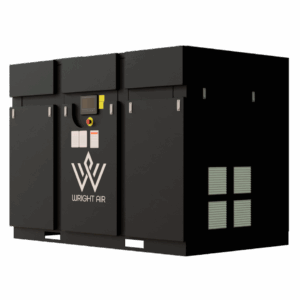
Two Stage Screw Compressors

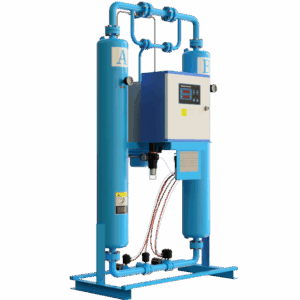

Desiccant Dryer
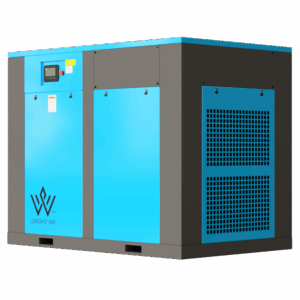
Screw Compressors
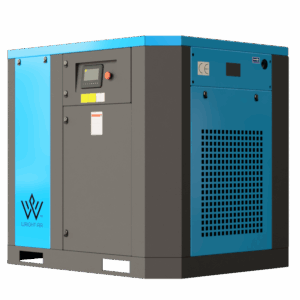

Screw Compressors
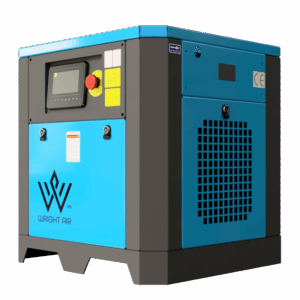

Screw Compressors

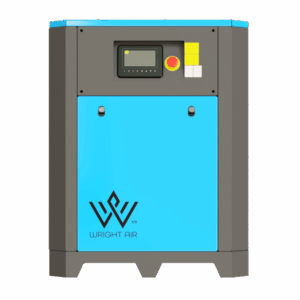
Screw Compressors