
The Complete Guide to Compressed-Air Reliability, Production Losses, Preventative Maintenance and the True Cost of Compressor Failure
Your compressor might cost thousands to repair. But how much is your factory losing while it is not running?
A practical South African guide for plant managers, maintenance engineers, production leaders and financial decision-makers.

In many industrial facilities, compressed air is a production utility rather than an optional convenience. It drives actuators, valves, tools, packaging equipment, material handling and process controls. When compressed air is unavailable—or pressure falls below the point-of-use requirement—the effect can spread through an entire production line.
The true cost of an interruption is not necessarily the price of a technician, replacement motor or compressor air end. It can include lost contribution margin, idle labour, damaged product, startup waste, emergency hire, overtime, premium freight and customer-service consequences. Those amounts must be calculated carefully: revenue is not profit, and the same loss should not be counted twice.
This guide shows how to calculate downtime exposure, identify technical risks, choose sensible redundancy, and turn maintenance into a measurable reliability programme. Illustrative financial figures are examples—not South African industry averages or Wright Air quotations.
1. Why compressed-air availability matters
Unlike electricity, compressed air is normally generated on site and then distributed through a network. That means availability depends on a chain: electrical supply, compressor, cooling and lubrication, controls, receivers, dryers, filters, pipework, regulators and the end-use equipment. A fault anywhere in that chain can disrupt the process.
A factory may also suffer partial downtime. A line can run slowly, cycle unreliably or reject product because pressure at the machine falls during peak demand, even while the compressor remains powered on. A good reliability assessment therefore measures both compressor uptime and delivery of usable air at the required pressure and quality.
2. What actually counts as downtime?
| Failure Mode | Operational Consequence | Useful Measure |
|---|---|---|
| Complete compressor shutdown | Production stops if no alternative air supply. | Minutes without adequate air. |
| Insufficient capacity / low pressure | Reduced speed, faults, and scrap. | Minutes below required point-of-use pressure. |
| Air-quality failure | Rejected product or process interruption. | Out-of-spec hours / batches. |
| Intermittent trips | Frequent stops and restarts. | Trip count and recovery duration. |
| Planned service interruption | Production impact if not coordinated. | Scheduled unavailable hours. |
Track planned and unplanned downtime separately. A scheduled service during a non-production shift may have little lost-output cost; an unexpected failure during a critical order can have a very large cost.
3. The financial anatomy of a compressor breakdown
Lost contribution margin—not automatically lost sales
A halted line may lose sales only if orders cannot be recovered later. For truly lost output, the relevant economic measure is generally lost contribution margin: the revenue that would have been earned less variable costs avoided because the product was not made. If production is recovered in overtime, the better measure may instead be the incremental recovery cost, not the full margin on the original output.
Labour, materials and recovery
Employees may remain paid while a line is stopped. But labour already included in a contribution-margin calculation or a fully burdened production-hour rate should not be added again. Other possible incremental costs include damaged work-in-progress, scrapped materials, requalification tests, additional cleaning, machine warm-up, outsourced capacity, overtime premiums, emergency compressor hire, expedited freight and contractor call-out fees.
Longer-term and harder-to-measure effects
Repeated failures can affect customer confidence, delivery performance, quality and maintenance workload. These consequences are real but should be reported separately unless the business has defensible data to quantify them. Avoid assigning a speculative rand value simply to make the total appear more dramatic.
4. A defensible downtime-cost calculation
Use a scenario-based model rather than multiplying an arbitrary industry-average hourly rate by every downtime hour.
| Cost Category | Calculation Method | Caution |
|---|---|---|
| Unrecoverable production | Lost units × contribution margin per unit. | Exclude output made up later. |
| Paid idle labour | Idle paid hours × relevant labour cost. | Do not double-count in contribution margin. |
| Scrap and restart | Verified wasted materials + incremental restart cost. | Use actual batch records. |
| Repair | Parts + call-out + contractor charges. | Separate repair from production loss. |
| Recovery production | Overtime premium + additional energy + outsourced capacity. | Use instead of lost margin if sales are recovered. |
| Customer / logistics | Documented penalties and incremental freight. | Exclude unverified reputational estimates. |
Formula: Total incident cost = unrecoverable contribution loss + incremental idle/restart/scrap costs + emergency repair and hire + incremental recovery/logistics costs + evidenced penalties. Remove overlaps and costs that would have occurred anyway.
5. Worked South African factory example: eight hours offline
Assume a manufacturing plant experiences an eight-hour compressed-air interruption during scheduled production. The values below are hypothetical and demonstrate the method; they are not a benchmark for factories in South Africa.
| Impact | Assumed Cost |
|---|---|
| Unrecoverable contribution margin | R80,000 |
| Incremental paid idle labour not included above | R18,000 |
| Documented scrap and restart costs | R12,000 |
| Emergency repair and call-out | R15,000 |
| Premium freight and recovery premiums | R25,000 |
| TOTAL ILLUSTRATIVE INCIDENT COST | R150,000 |
In this example, the repair bill is only 10% of the modelled incident cost. The result changes dramatically if output can be recovered without extra cost, if the plant has backup air, or if labour has already been included in the contribution calculation. Build a low/base/high scenario using your own records.
Break-even test for prevention investment
Suppose a reliability improvement costs R60,000 and is expected to avoid one incident with an incremental impact of R150,000. The gross avoided incident exposure is R150,000; the illustrative net benefit from avoiding one such event is R90,000 before ongoing costs and discounting. That does not prove the incident would have happened. To evaluate an investment, estimate annual failure probability and expected reduction in loss, then compare against total lifecycle cost.
6. Common causes of unplanned compressor downtime
Overheating and inadequate cooling
Dirty coolers, blocked ventilation, high ambient temperatures, failed fans, incorrect lubrication or elevated discharge pressure can drive operating temperatures toward protective shutdown thresholds. Follow the specific manufacturer alarm and trip settings; there is no universal safe temperature for every screw compressor.
Lubrication and separator problems
Incorrect oil type, degraded lubricant, inadequate oil level, restricted oil filters and separator issues can impair lubrication, cooling and efficiency. Maintenance intervals depend on equipment, duty, oil chemistry and conditions—not a universal calendar rule.
Electrical, controls and motor faults
Power quality, loose connections, failed contactors, VSD faults, overloads, sensors and control logic can stop a healthy mechanical compressor. Qualified personnel should investigate electrical protection faults; repeatedly resetting alarms can worsen damage or create hazards.
System-level causes
Air leaks, undersized pipework, dirty treatment filters, excessive pressure drop and unexpected demand can make an otherwise functional compressor appear unreliable. Distinguish supply failure from delivery failure by recording compressor discharge and critical point-of-use pressures simultaneously.
7. Small warning signs that precede expensive failures
- Operating temperature gradually rising under similar ambient and load conditions.
- Unusual vibration, noise or repeated alarms.
- Longer loaded running hours without an increase in productive demand.
- Increasing pressure differential across filters or separators.
- Oil leaks, changing lubricant condition or abnormal consumption.
- Rising dryer dew point, condensate carryover or deteriorating air quality.
- Increasing starts, control hunting or unstable network pressure.
No single trend proves an imminent breakdown. Trend interpretation requires operating context, baseline measurements and manufacturer limits. The point is to investigate change before a protective trip becomes a production event.
8. Preventative maintenance: planned intervention beats emergency response
A maintenance plan should combine the manufacturer service schedule with operating hours, environment, contamination exposure, operating temperature, duty cycle and site risk. Core tasks typically include checking ventilation and cooler cleanliness; lubricant and filter service; drains and condensate management; belts or couplings where fitted; electrical inspection by qualified personnel; and verification of safety devices and controls.
A planned shutdown is not automatically free. Coordinate maintenance with production windows and calculate the cost of planned access. However, planned work allows parts, personnel, lifting equipment and temporary air to be arranged in advance—reducing uncertainty and recovery time.
9. Condition-based monitoring and early fault detection
Condition monitoring focuses on changes that indicate degradation. Useful signals may include operating temperature, ambient temperature, compressor discharge pressure, load/unload or VSD operating profile, running hours, vibration where applicable, filter differential pressure, dew point and lubricant analysis.
The monitoring programme should have a clear response rule: who reviews trends, what triggers an inspection, what data are recorded and when production must be notified. More sensors are not inherently better if alarms are ignored or poorly calibrated.
10. Redundancy: what N+1 really means
An N+1 arrangement provides enough installed capacity to meet the defined critical demand with one designated unit unavailable. That is not the same as simply owning two compressors. For example, if a plant requires 10 m³/min at the necessary pressure and each compressor provides only 6 m³/min, two units together may meet demand but losing one leaves the plant short.
Design redundancy using delivered flow at the required pressure, air quality, duty cycle, common-mode risks and realistic peak demand. A second compressor connected to the same vulnerable power feed, cooling arrangement or control panel may not provide the independence expected.
One large machine or several smaller units?
Multiple machines can improve maintenance flexibility, turndown and resilience, but add complexity and may increase cost. One large machine can be simpler and sometimes more efficient at a stable load, but represents a larger single point of failure. Use measured demand, lifecycle cost and criticality—not a blanket rule—to select the architecture.
11. Can an air receiver keep the factory running?
A receiver can bridge short transients and allow controlled shutdowns, but it rarely supports an entire factory for hours without compressor supply. Usable storage depends on vessel volume, pressure differential and actual flow demand. The available air must be assessed with correct absolute-pressure relationships and safety constraints; never exceed the receiver rated pressure.
For long outages, investigate standby generation, alternate compressor connections or temporary compressor hire rather than assuming the receiver provides meaningful production backup.
12. Recovery time depends on spare parts and planning
Mean time to repair is shaped by more than technician skill. A failure can be extended by delayed diagnosis, missing spares, restricted site access, permits, electrical isolation, transport, contractor availability or delayed testing after repair.
- Identify critical spares with long lead times and known failure history.
- Keep accurate model, serial number and service records accessible.
- Document supplier, contractor and emergency contact details.
- Provide a safe, tested temporary-air connection where justified.
- Create a restart checklist that includes pressure, quality and product checks.
13. Emergency response versus planned maintenance
Reactive maintenance is necessary for unexpected faults, but a strategy dominated by emergency response tends to expose production to unpredictable downtime. Preventative work targets known wear and contamination mechanisms; condition-based work targets emerging faults; contingency planning limits the impact when failure still occurs.
The objective is not zero maintenance expenditure. It is the lowest practical total cost of reliable production—including energy, service, repair, production risk and asset life.
14. A compressed-air system reliability audit
A useful audit combines equipment inspection with operational data and production requirements. It should not end with a recommendation to buy a bigger compressor unless demand and distribution evidence support that conclusion.
| Audit Area | Questions to Answer |
|---|---|
| Demand | What are normal, peak, and critical air requirements? |
| Pressure | What pressure reaches the farthest critical machine during peak production? |
| Quality | What dew point, oil, and particle classes are required? |
| Equipment | What are the failure history, age, loading profile, and service condition? |
| Controls | Are compressors sequenced correctly? Are alarms acted upon? |
| Distribution | Are leaks, restrictions, and condensate affecting supply? |
| Resilience | What happens if the largest compressor is unavailable? |
| Recovery | How quickly can backup air, parts, and technicians be mobilised? |
15. Build a reliability strategy around measurable outcomes
Start by ranking compressed-air-dependent processes according to the consequence of lost air. Then define acceptable downtime, pressure and air-quality limits. Build a maintenance and monitoring plan that matches those requirements. Review failures and near misses using root-cause analysis, and track whether corrective actions actually prevent recurrence.
Useful performance indicators
- Unplanned compressed-air-related production downtime (hours per month).
- Mean time between relevant failures (MTBF), defined consistently.
- Mean time to restore usable air (MTTR), including diagnosis and restart.
- Critical point-of-use pressure compliance during peak demand.
- Number of repeat faults and overdue preventive tasks.
- Verified incident costs and avoided recurrence.
- Energy use per unit of delivered air where reliable metering is available.
Use consistent definitions. A compressor that is mechanically available but cannot deliver required pressure or air quality may not be functionally available to production.
16. Repair or replace an ageing compressor?
Age alone does not determine replacement. Compare repair scope, remaining life, efficiency, spares availability, condition, duty requirements, expected future failures, redundancy and installation constraints. A compressor with high operating hours may still be economical to retain if well maintained and supported; a newer but chronically undersized unit may be the wrong fit.
Use a total-cost-of-ownership comparison over an appropriate period. Include capital cost, installation, electricity, service, anticipated repairs, downtime exposure and residual value. Avoid treating estimated future failures as certainties.
17. Wright Air compressed-air reliability checklist
- Identify every production process that depends on compressed air.
- Record required flow, pressure and air quality at critical points of use.
- Log actual production losses from compressor and system incidents.
- Confirm current service history and manufacturer maintenance requirements.
- Check cooling, ventilation, oil, filters, drains and controls.
- Investigate recurring alarms rather than repeatedly resetting them.
- Measure pressure drop across treatment equipment and distribution.
- Assess whether the system can support production with one compressor unavailable.
- Document spare-parts lead times and emergency contact arrangements.
- Review temporary compressor connection and electrical requirements.
- Set condition-monitoring triggers and clear responsibilities.
- Recalculate downtime exposure after major process changes.
18. Frequently asked questions
There is no reliable universal rand-per-hour figure. Calculate the specific facility’s unrecoverable contribution loss and incremental recovery costs, avoiding double-counting.
No. Some sites have standby compressors, stored air for short interruptions or processes that can continue at reduced capacity.
Not every maintenance task is justified. A risk-based programme compares the cost of planned work with the probability and consequence of failure.
It means sufficient capacity remains to serve the defined demand after one specified unit is unavailable.
Usually not for extended outages. Receivers help with short transients and temporary bridging, depending on demand and usable pressure range.
Temperature, pressure, loading, running hours, alarms, service condition and relevant vibration, lubricant, differential-pressure and air-quality signals.
When lifecycle economics, condition, efficiency, spares support, capacity or reliability risk favour replacement over continued operation.
Yes. Restrictions, leaks, condensate and air-quality problems can interrupt production even when the compressor remains operational.
19. Protect production, not just the compressor
The most important compressed-air reliability question is not simply how fast a failed machine can be repaired. It is how the plant can avoid the interruption, maintain usable air when a component is unavailable and recover safely when an incident occurs. That requires equipment maintenance, distribution performance, intelligent controls, redundancy planning and an honest understanding of financial exposure.
Before another breakdown becomes a costly production event, measure the risk, prioritise the vulnerabilities and build a realistic reliability plan. Wright Air can help businesses assess compressor condition and the wider compressed-air system so investment is directed toward dependable, efficient production.
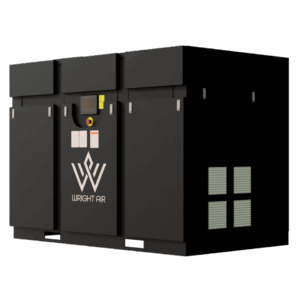
Two Stage Screw Compressors

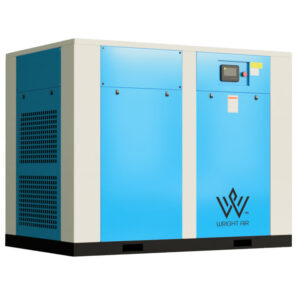
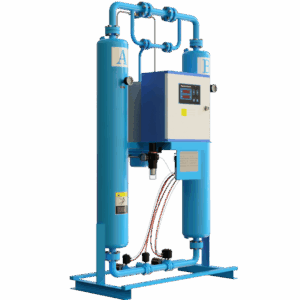

Desiccant Dryer
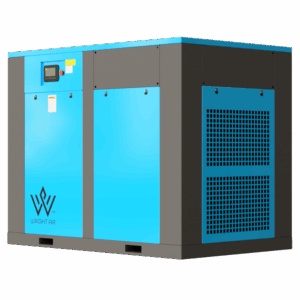
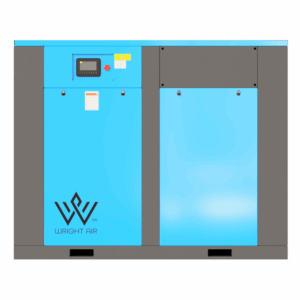
Screw Compressors
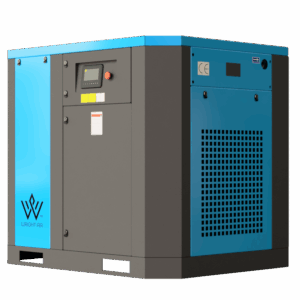

Screw Compressors
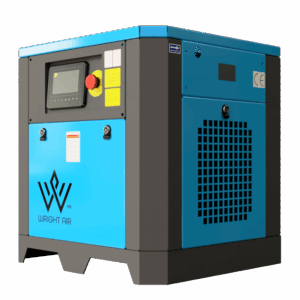

Screw Compressors

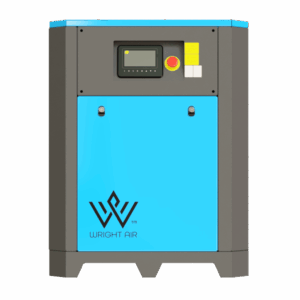
Screw Compressors