
10 Causes of High Compressed-Air Energy Consumption – and How to Reduce Your Operating Costs
A practical energy-efficiency guide for South African industrial compressed-air systems
Compressed Air Is Useful – but It Is Not Free
Compressed air is one of the most useful utilities in industry. It powers tools, actuators, packaging equipment, production machinery, automation and process applications across manufacturing, mining, workshops and general industry. But every cubic metre of compressed air has an electricity cost attached to it.

That cost is often poorly understood because compressed air does not arrive with a visible price tag at the point of use. A leaking hose does not look like an electricity bill. A pressure setting that is one bar too high does not necessarily trigger an alarm. An oversized compressor may still keep production running. A fixed-speed machine can continue unloading for hours without anyone noticing how much energy is being consumed without useful air being produced.
Wright Air’s own energy-efficiency material treats compressed air as a system rather than simply a machine. Its current VSD Energy Saving Calculator asks for compressor power, loaded running hours, unloaded running hours and electricity cost – exactly the variables that begin to expose what a compressor is really costing a business.
The key question is therefore not only, “How much electricity does my compressor use?” It is: “How much of that electricity is creating useful compressed air, and how much is being lost through leaks, excessive pressure, poor control, restrictions or inappropriate equipment selection?”
1. Air Leaks: Paying for Air You Never Use
Leaks are among the most common sources of compressed-air waste. They can occur at couplings, hoses, valves, drains, seals, fittings, regulators, quick-connects and ageing pipework. A single leak may appear insignificant, but a plant can contain dozens or hundreds of them.
The cost is continuous whenever the system remains pressurised. The compressor has already used electrical energy to draw in, compress, cool and deliver the air. If that air escapes before performing useful work, the electricity has been spent for no productive return.
Wright Air’s published leak-detection guidance notes that leakage can represent a substantial portion of compressor output in poorly maintained systems. The practical lesson is more important than any generic percentage: leakage must be measured at the individual site, repaired and then monitored so that the losses do not quietly rebuild.
A larger compressor is not the correct first response to a leaking system. If the plant buys more capacity without repairing the network, it may simply create more capacity to feed the leaks.
2. Operating at More Pressure Than Production Actually Needs
Pressure is frequently increased as a quick response to complaints from production. A machine at the far end of the plant struggles, so the compressor setpoint is raised. The symptom improves, but the underlying cause may remain.
Higher discharge pressure generally requires more compressor work. It can also increase the amount of air passing through leaks and unregulated users. The result can be a double penalty: more energy is used to produce each unit of air, while the system may consume more air at the same time.
Wright Air’s energy-audit guidance highlights pressure optimisation as a major efficiency opportunity and states that a 1 bar pressure reduction can produce an indicative energy reduction of around 7% in suitable systems. That should be treated as an engineering rule of thumb rather than a guaranteed saving for every plant, because actual results depend on compressor type, controls and demand.
The correct process is to establish the minimum pressure required at the critical point of use, measure pressure loss through the system under real load, remove avoidable restrictions and then set the compressor pressure as low as production reliably allows.
3. An Oversized Compressor Can Be an Energy Problem
Bigger is not automatically safer or more efficient. A compressor selected far above the plant’s real demand can spend significant time at inefficient operating points.
With conventional load/unload control, an oversized fixed-speed machine may repeatedly load, reach its pressure limit and unload. During unloaded operation, power consumption does not necessarily fall anywhere near zero. The machine may still be consuming electricity while producing little or no useful compressed air.
Even VSD equipment needs to be correctly sized. Variable speed improves the ability to match output to changing demand, but every compressor has an efficient operating envelope. A machine that is dramatically oversized can still spend too much time at the bottom of its useful range.
Correct sizing begins with measured airflow, pressure, duty cycle and demand variation – not simply the kW rating of the machine being replaced.
4. Excessive Unloaded Running
Loaded hours and unloaded hours tell very different stories. When loaded, the compressor is producing air for the system. When unloaded, many compressor designs continue to run but are no longer delivering useful capacity in the same way.
This is why Wright Air’s VSD Energy Saving Calculator specifically asks users to enter loaded and unloaded running hours. Unloaded running is a strong clue that a facility may have an opportunity to improve control strategy, sizing or compressor sequencing.
The important metric is not merely total run hours. It is how those hours are divided between productive and non-productive operating states.
If a compressor spends a large portion of the working day unloaded, the business should investigate why. Potential causes include oversizing, poor pressure-band settings, multiple compressors fighting one another, demand that varies significantly, or an operating schedule that leaves machines running when production is low.
5. The Wrong Fixed-Speed/VSD Strategy for the Demand Profile
Variable Speed Drive compressors adjust motor speed to better match air demand. This can be particularly valuable where consumption changes significantly throughout the day.
Wright Air’s current product positioning is strongly focused on VSD screw compressors, and its website describes VSD technology as a way to match compressor output to real demand and reduce unnecessary energy consumption.
However, the correct decision is not “VSD is always better.” A plant with a very stable base load can require a different strategy from a plant whose demand moves continuously between low and high production.
In larger systems, an efficient arrangement may combine a base-load compressor with a VSD trim compressor. The base machine handles stable demand while the VSD machine responds to fluctuations. The correct solution comes from demand profiling, not from technology labels alone.
6. Dirty Filters, Restricted Separators and Pressure Differential
Every restriction between the compressor and the point of use has a cost. Intake filters, oil separators, downstream filters and other components become more restrictive as they load with contamination or reach the end of their service life.
A restriction can reduce delivered pressure or force the compressor to operate at a higher discharge pressure to achieve the same pressure at production. Either way, efficiency suffers.
This is one reason preventive maintenance is an energy-management activity, not merely a reliability activity. Replacing filters and service items at appropriate intervals helps preserve the pressure differential and operating conditions the system was designed for.
The correct approach is to measure differential pressure across key components and replace or service them based on condition and manufacturer requirements rather than waiting until production complains about low pressure.
7. Dryers and Air Treatment Can Quietly Add to the Bill
Compressed air often needs to be dried and filtered before it reaches production. That treatment is essential in many applications, but it must be correctly sized and maintained.
A dryer or filter that creates excessive pressure drop can cause operators to raise compressor pressure. Some dryer technologies also consume purge air or electrical power as part of their operation. If the equipment is poorly selected, incorrectly sized or badly maintained, the ancillary energy cost can become significant.
The correct question is therefore not only whether the compressor is efficient. It is whether the complete air-treatment train is efficient at the plant’s actual flow, pressure and air-quality requirement.
Specify only the air quality the process genuinely requires, size treatment equipment for realistic conditions and monitor pressure differential and dew point where appropriate.
8. Poor Pipework and Distribution Design
A compressor can be efficient in the compressor room and still support an inefficient plant. Undersized pipework, long runs, restrictive fittings, excessive bends and poorly designed branches create pressure loss as air moves through the network.
When pressure is lost in the distribution system, operators often compensate by increasing compressor discharge pressure. The compressor then uses more energy to overcome a problem that should have been solved in the pipework.
A better distribution system can allow the compressor to operate at a lower pressure while delivering the same or better pressure at the machine.
Pressure should therefore be measured at the compressor room and at critical points of use during peak demand. The difference reveals how much pressure the network is consuming.
9. Artificial Demand and Inappropriate Uses of Compressed Air
Not every compressed-air user needs full system pressure. Open blowing, cooling, drying, cleaning and other unregulated applications can consume large quantities of air, particularly when supplied directly from a high-pressure ring main.
This is often called artificial demand: consumption created or increased because the available pressure is higher than the application actually requires.
Facilities should identify inappropriate or uncontrolled uses of compressed air and ask whether the task can be regulated, engineered more efficiently or performed using another technology.
The cheapest cubic metre of compressed air is the one the compressor never has to produce.
10. Multiple Compressors That Are Not Properly Sequenced
Multi-compressor installations can offer excellent flexibility and redundancy, but poor coordination can waste substantial energy.
If several machines operate with overlapping pressure bands, they may load and unload against one another. A large compressor may run unloaded while another machine trims demand. Multiple machines may remain online when one correctly selected compressor could carry the load.
A properly engineered sequencing strategy aims to keep the required compressors operating in efficient states while minimising unnecessary unloaded running and maintaining stable system pressure.
Modern monitoring and control systems can make this behaviour visible. Wright Air’s current website also emphasises remote monitoring and IoT-enabled performance tracking as tools for understanding compressor behaviour and detecting inefficiencies earlier.
The Most Expensive Air Is the Air You Compress and Never Use
Compressed air waste is easy to ignore because it is invisible. But the electricity meter still sees it.
A useful way to think about system efficiency is to divide compressor output into two categories: productive air that performs useful work, and non-productive air that is lost through leakage, unnecessary pressure, uncontrolled uses, pressure drop or inefficient control.
The objective of energy optimisation is not simply to make the compressor consume fewer kilowatts. It is to reduce the electrical energy required for every unit of useful compressed air delivered to production.
Why Turning the Pressure Up Can Cost You Twice
Increasing system pressure can create two separate energy penalties.
Penalty 1: The compressor works harder
Higher pressure requires greater compression work. The exact increase depends on compressor design and operating conditions, but the direction is clear: producing higher-pressure air costs more energy.
Penalty 2: The system can consume more air
Leaks and unregulated users can pass more air as system pressure rises. This means the plant can consume more compressed air simply because more pressure is available.
That can create a damaging cycle: higher pressure -> greater compressor power -> greater leakage and artificial demand -> longer compressor runtime -> higher electricity cost.
The engineering solution is to fix pressure losses and regulate demand, not simply keep increasing the setpoint.
What Is Your Compressor Actually Costing You Per Year?
A first-pass electricity-cost estimate can be useful for understanding the scale of the opportunity.
A simplified screening calculation is:
Estimated annual electricity cost = average electrical input (kW) x operating hours per year x electricity tariff (R/kWh)
For example, if a compressor averages 50 kW of electrical input for 4,000 hours per year and electricity costs R2.50/kWh, the simple estimate is:
50 kW x 4,000 h x R2.50/kWh = R500,000 per year
This is an illustrative calculation, not a substitute for measurement. Nameplate motor kW should not automatically be treated as constant electrical consumption. Real power varies with loading, pressure, motor efficiency, drive losses and operating state.
For a stronger analysis, separate loaded and unloaded hours, measure actual power where possible and correlate energy consumption with delivered airflow. That turns an electricity estimate into an efficiency assessment.
Go One Step Further: Measure the Cost of Useful Air
Annual electricity cost tells you how much the compressor costs to run. It does not tell you whether the air is being produced efficiently.
A more meaningful KPI is specific energy or the electrical energy required to produce a given quantity of compressed air at a defined pressure. Tracking this over time can reveal deterioration, poor controls or changes in demand that a simple monthly electricity bill may hide.
The same principle is visible in Wright Air product datasheets, which publish performance data such as full-load capacity at different pressures. Compressor efficiency must always be evaluated at the operating condition that matters to the plant.
10 High-Energy Symptoms and What They May Mean
| What You Notice | Possible Energy Problem |
|---|---|
| Electricity use rises but production does not | Leaks, restrictions, maintenance deterioration or control changes |
| Compressor runs after production stops | Leaks, poor shutdown discipline or inappropriate controls |
| Compressor spends long periods unloaded | Oversizing, poor sequencing or variable demand |
| Operators keep increasing pressure | Distribution losses, dirty filters or incorrect point-of-use pressure |
| Pressure is high in the compressor room but low at machines | Pipework or treatment pressure drop |
| Several compressors are online at light production | Poor sequencing or oversized installed capacity |
| Demand is highly variable | Potential VSD/trim-control opportunity |
| Dryer/filter differential pressure is increasing | Maintenance or sizing issue |
| Weekend/base-load air demand is unexpectedly high | Leakage or non-productive users |
| No one can explain compressor kWh per unit of production | Insufficient monitoring and measurement |
A Practical 12-Step Energy Reduction Plan
- Measure current compressor electrical consumption and operating hours.
- Separate loaded, unloaded, stopped and low-load operating time.
- Measure system airflow and identify normal, peak and off-shift demand.
- Perform a leak survey and repair high-value leaks first.
- Measure pressure at the compressor room and critical points of use.
- Reduce unnecessary pressure only after confirming production requirements.
- Check pressure differential across filters, dryers and separators.
- Review pipework restrictions and distribution design.
- Identify inappropriate open-blowing and unregulated applications.
- Review compressor sizing and fixed-speed/VSD suitability.
- Optimise sequencing in multi-compressor systems.
- Re-measure after improvements and track savings over time.
Why an Energy Audit Beats Guesswork
A compressed-air energy audit replaces assumptions with data. Wright Air describes its audit approach around generation, distribution, energy consumption and delivery to end users, with attention to sizing, compressor controls, pressure, leaks and air treatment.
The output of a good audit should not simply be a list of faults. It should prioritise opportunities by energy impact, cost, operational risk and payback. No-cost and low-cost changes should be separated from capital projects so management can act strategically.
This is particularly important in facilities with multiple compressors, long operating hours, rising electricity costs or uncertainty about whether existing equipment is correctly sized.
Where VSD Can Make a Measurable Difference
VSD technology is most valuable when the plant has meaningful variation in air demand and the compressor can operate within an appropriate modulation range.
Wright Air provides an online VSD Energy Saving Calculator that uses compressor power, loaded running hours, unloaded running hours and electricity cost to estimate potential annual energy savings and cost reduction. It is a useful screening tool for identifying whether a deeper assessment is warranted.
The calculator should be used as an estimate rather than a guarantee. A final investment decision should be supported by actual demand data, system pressure requirements and the performance of the proposed compressor at the relevant operating conditions.
Common Energy-Saving Mistakes
Buying a VSD compressor before measuring demand
VSD can be highly effective, but technology should follow the demand profile.
Treating every low-pressure complaint as a compressor problem
The restriction may be in filters, dryers or pipework.
Lowering pressure without checking critical equipment
Pressure optimisation must protect production.
Repairing leaks once and assuming the job is finished
Leak management is an ongoing maintenance process.
Using nameplate kW as actual power consumption
Real electrical input changes with operating state and conditions.
Focusing only on the compressor
The receiver, dryer, filters, controls, pipework and end uses all influence energy cost.
Comparing equipment only on purchase price
Energy consumed over the machine life can materially change the economic decision.
Frequently Asked Questions
Why is my air compressor electricity bill suddenly higher?
Possible causes include increased production demand, new leaks, higher pressure settings, dirty filters, dryer restrictions, longer unloaded running, control changes or mechanical deterioration. Compare current operating data with a known good baseline.
Does lowering compressor pressure save electricity?
Often yes, provided production still receives the pressure it needs. The actual saving varies by system. First measure point-of-use pressure and remove avoidable pressure losses.
Does a VSD compressor always use less electricity?
No. VSD is particularly effective where demand varies, but correct sizing and application remain essential. Stable base-load systems may require a different strategy.
How do I know whether my compressor is oversized?
Warning signs can include frequent load/unload cycling, long unloaded periods, low average utilisation and a large gap between installed capacity and measured demand.
Can air leaks really make a major difference?
Yes. Leakage can become a significant continuous load, especially in older or poorly maintained networks. The actual percentage should be measured at your site.
Should I turn my compressor off when production stops?
Where operationally safe and compatible with the process, eliminating unnecessary pressurised hours can reduce leakage losses and runtime. Shutdown strategy should consider critical users and restart requirements.
How can I calculate my annual compressor electricity cost?
For a rough estimate, multiply average electrical input in kW by annual operating hours and the electricity tariff in R/kWh. For accurate analysis, measure real power and separate operating states.
What is the fastest way to reduce compressed-air energy cost?
The highest-return actions often begin with measurement, leak repair, pressure optimisation, eliminating inappropriate uses and improving controls before major equipment replacement.
Can Wright Air help assess energy savings?
Wright Air publishes energy-efficiency guidance and a VSD Energy Saving Calculator and supports compressed-air system optimisation through its distributor and technical-support network.
Conclusion: Stop Treating Compressed Air as an Invisible Utility
A compressor that is running is not necessarily a compressor that is running efficiently.
High electricity consumption is rarely explained by one number. It is the result of how the compressor, controls, pressure settings, storage, air treatment, pipework and end users interact as a complete system.
The biggest opportunities often come from asking better questions: How much air are we actually using? How much are we leaking? Why are we operating at this pressure? How many hours are unloaded? Are our compressors sequenced correctly? Does our technology match our demand profile?
Measure first. Fix waste second. Upgrade equipment where the data supports it. Then verify the savings.
THE RIGHT AIR. AT THE RIGHT PRESSURE. WITH LESS WASTED ENERGY.
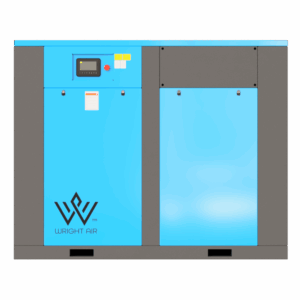
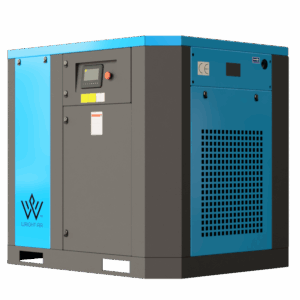
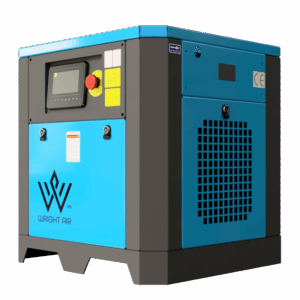
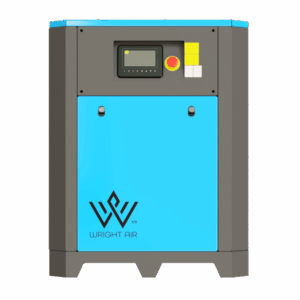
Wright Air Compressors supports South African industry with VSD screw compressors, energy-focused compressed-air solutions, technical support, monitoring technology and tools designed to make compressor efficiency measurable.
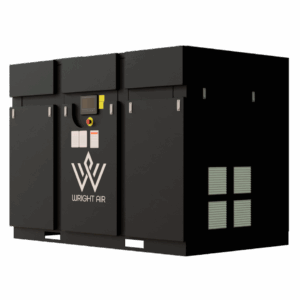
Two Stage Screw Compressors

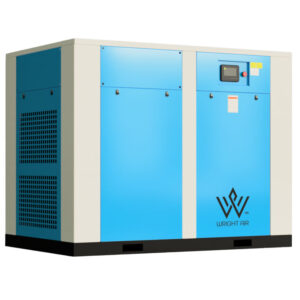
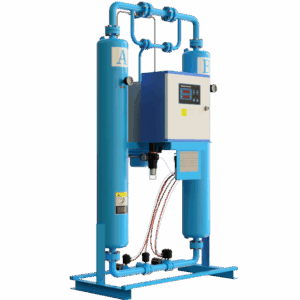

Desiccant Dryer
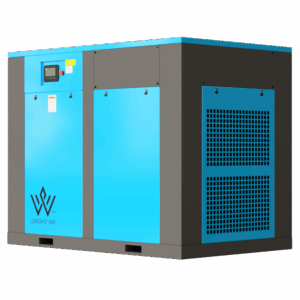
Screw Compressors

Screw Compressors

Screw Compressors

Screw Compressors