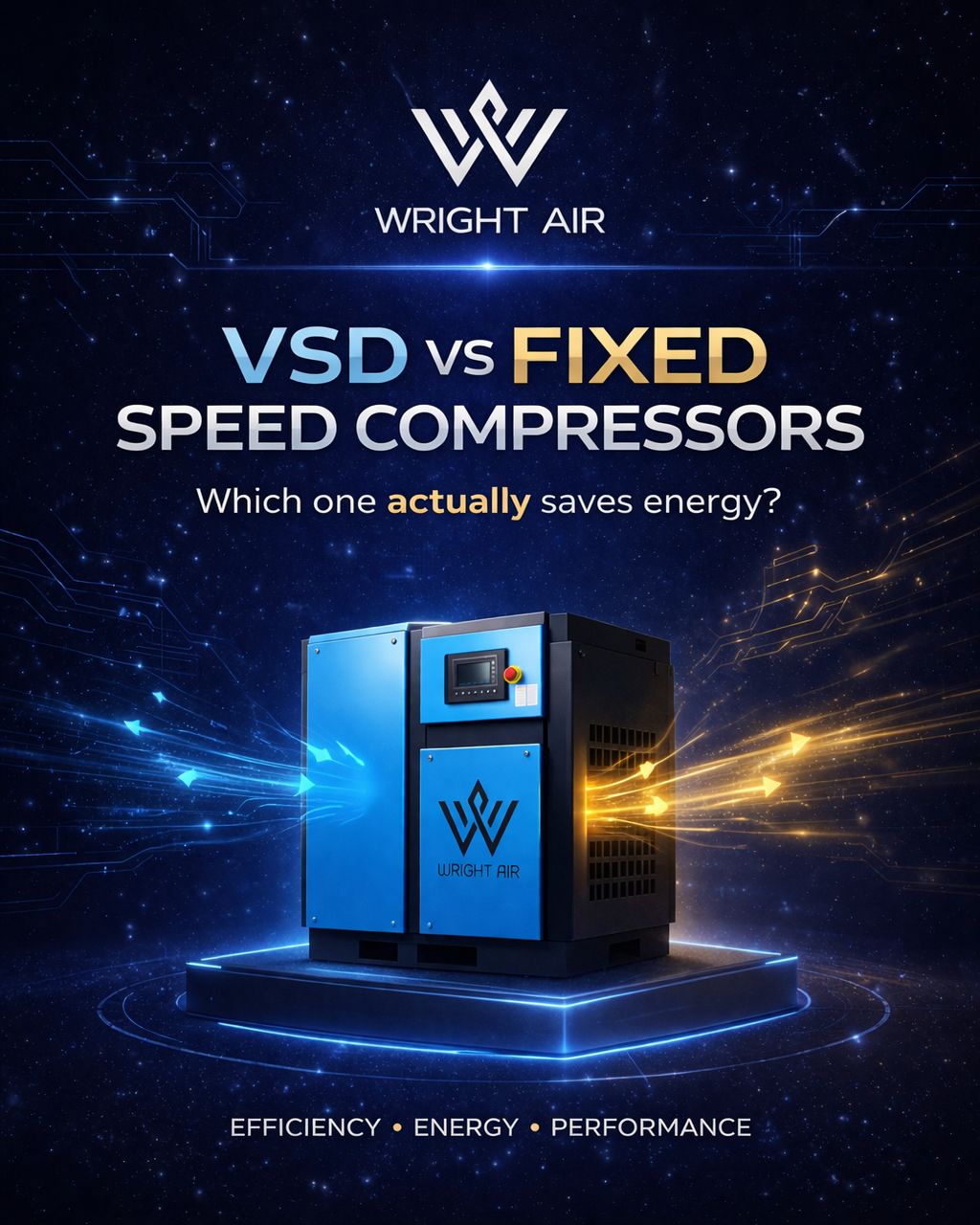
Selecting the right compressor technology is one of the most important decisions when designing a compressed air system. Two of the most common technologies used in modern industrial facilities are fixed-speed compressors and Variable Speed Drive (VSD) compressors.
While VSD compressors are often promoted as the most energy-efficient option, the reality is more nuanced. The performance and efficiency of a compressor depend heavily on how compressed air is actually used within a facility.
Understanding the difference between fixed-speed and VSD compressors helps manufacturers choose the most efficient solution for their specific operational needs.
How Fixed-Speed Compressors Work
A fixed-speed compressor operates at a constant motor speed whenever it is running.
When system pressure drops below a predetermined setpoint, the compressor starts and produces compressed air at full capacity. Once the pressure reaches the upper limit, the compressor either shuts down or enters an unloaded state where the motor continues to run but produces no compressed air.
This operating cycle repeats throughout the day as system demand fluctuates.
Advantages of Fixed-Speed Compressors:
- Lower initial purchase cost
- Simple and robust mechanical design
- Reliable operation in steady demand environments
- Easier maintenance and servicing
These compressors perform best in facilities where compressed air demand remains relatively constant, such as continuous production lines or automated manufacturing plants.
How VSD Compressors Work
A Variable Speed Drive compressor adjusts its motor speed to match the actual compressed air demand of the system.
Instead of running at full capacity all the time, the compressor motor accelerates or decelerates depending on how much air is required.
When air demand decreases, the motor slows down. When demand increases, the motor speeds up to supply additional air.
This ability to continuously adjust output allows VSD compressors to maintain stable pressure while reducing unnecessary energy consumption.
Where VSD Compressors Excel
VSD compressors deliver the greatest benefits in facilities where compressed air demand fluctuates significantly.
- Factories with variable production schedules
- Plants with multiple shifts
- Facilities where machinery starts and stops frequently
- Operations with intermittent pneumatic tools
In these environments, fixed-speed compressors may spend significant time running unloaded, wasting electricity. VSD compressors reduce this inefficiency by producing only the amount of air required at any given moment.
Energy Efficiency Considerations
Energy consumption accounts for the largest portion of a compressor’s lifetime operating cost.
In systems with variable demand, VSD compressors can reduce energy consumption by 20–35% compared to traditional fixed-speed units.
However, in systems where compressed air demand remains stable, the efficiency advantage of a VSD compressor may be limited. Understanding the demand profile of the facility is therefore essential before selecting compressor technology.
The Importance of Demand Profiling
Demand profiling measures how compressed air is used throughout the day.
- Average airflow demand
- Peak demand periods
- Pressure stability
- Fluctuations in production cycles
Without accurate demand data, compressor selection becomes guesswork. Many facilities install VSD compressors expecting major energy savings, only to discover that their system demand is too stable to fully benefit from variable speed technology.
Hybrid Compressor Systems
In many cases, the most efficient compressed air system uses a combination of compressor technologies.
- One fixed-speed compressor operating as the base-load unit
- One VSD compressor managing demand fluctuations
This hybrid configuration allows the fixed-speed compressor to operate near peak efficiency while the VSD compressor adjusts to system demand. The result is improved energy efficiency and stable system pressure.
The Wright Air Approach
At Wright Air Compressors, compressor selection begins with analysing how compressed air is actually used within the facility.
- System demand patterns
- Pressure requirements
- Production cycles
- Energy consumption
This data-driven approach ensures that the compressor system delivers maximum efficiency, reliability, and long-term performance.
Conclusion
Both fixed-speed and VSD compressors have an important role in modern compressed air systems.
The key is understanding when each technology provides the greatest benefit. By analysing air demand and designing systems around actual usage patterns, manufacturers can improve efficiency, reduce energy costs, and ensure reliable operation.
In compressed air engineering, the best solution is not always the most advanced technology — it is the one that fits the system best.
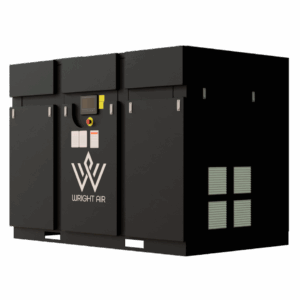
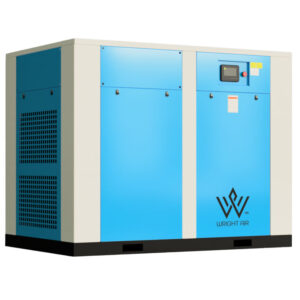
Two Stage Screw Compressors

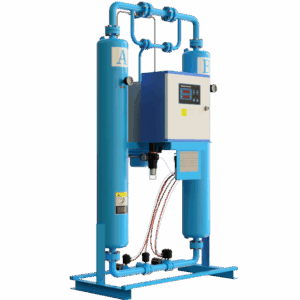

Desiccant Dryer
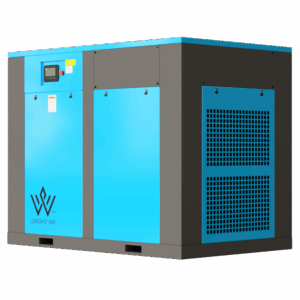
Screw Compressors
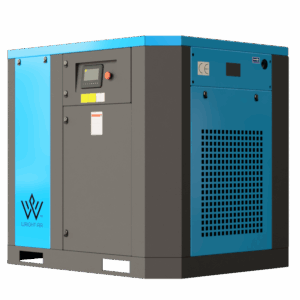

Screw Compressors
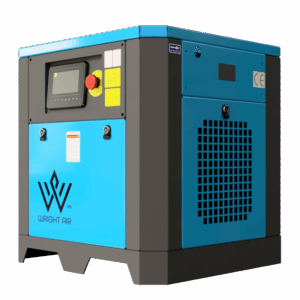

Screw Compressors

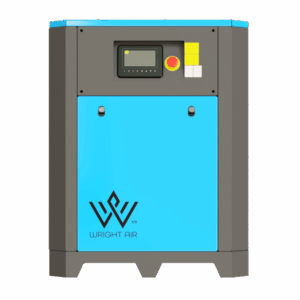
Screw Compressors