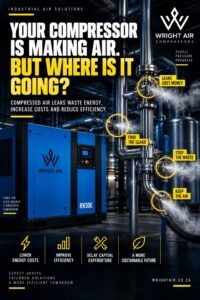
In South African industry, pressure is expensive.
Every kilowatt matters. Every production hour counts. Every avoidable cost cuts deeper than it should.
Yet across factories, workshops, processing plants, warehouses, and production facilities throughout South Africa, compressed air systems are still being run at unnecessarily high pressure, often without anyone realising what it is truly costing the business.
It is one of the most common inefficiencies in local industry. It is also one of the most overlooked.
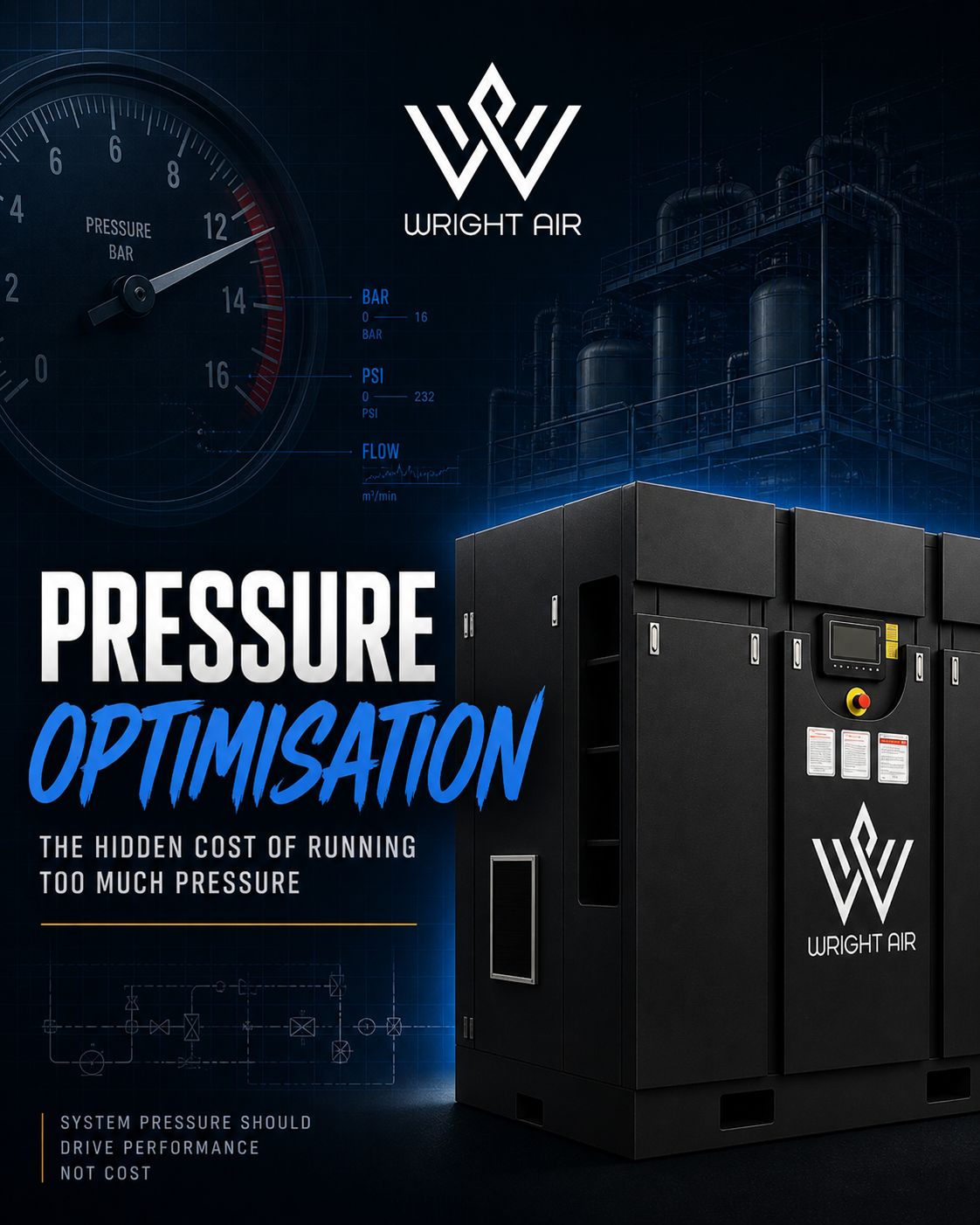
When compressed air pressure is set higher than the application actually requires, the system consumes more power, leaks more air, places more strain on equipment, and drives up maintenance costs. In an economy already burdened by rising electricity tariffs, infrastructure pressure, and tightening operating margins, running too much pressure is not just inefficient. It is expensive.
Pressure optimisation is one of the fastest and most practical ways South African businesses can reduce compressed air costs without compromising output.
Why Pressure Matters More in South Africa
Compressed air has always been one of the most expensive utilities in industrial production.
In South Africa, that cost is amplified.
Electricity remains one of the biggest operating pressures facing local industry. With ongoing tariff increases, supply instability, and the constant need to protect uptime, businesses can no longer afford inefficient utility systems running in the background unchecked.
Compressed air is often one of the largest hidden consumers of power in a facility, second only to major production equipment in many operations. Yet unlike visible production systems, compressed air is rarely scrutinised with the same urgency.
That is where pressure becomes a problem.
Every additional 1 bar of compressed air pressure can increase energy consumption by approximately 7 percent.
For a South African manufacturer already battling rising electricity costs, that increase is not minor. It compounds across every hour of operation, every shift, every production cycle, and every month on the municipal or Eskom bill.
In practical terms, many facilities are paying significantly more for compressed air than they need to, simply because system pressure has never been properly reviewed.
Why South African Plants Commonly Run Too Much Pressure
In many South African facilities, compressed air systems have evolved around operational workarounds rather than system optimisation.
Pressure gets increased because production cannot stop. It gets increased because downtime is costly. It gets increased because it is quicker than solving the actual problem.
Over time, that temporary adjustment becomes permanent.
This is especially common in local industry where ageing infrastructure, deferred maintenance, plant expansions, and legacy equipment all place additional strain on utility systems.
1. Pressure Is Often Masking Leaks in Ageing Infrastructure
Air leaks are one of the most common sources of compressed air waste in South African industry, particularly in older plants with ageing pipework, neglected joints, worn fittings, and years of undocumented modifications.
In many facilities, leaks have become part of the background.
Instead of repairing them, pressure is increased to maintain output.
The problem is that higher pressure increases leak volume, which means businesses pay more to produce more air, only to lose more of it before it reaches production.
2. Poor Pipe Design Creates Avoidable Pressure Drop
Many South African compressed air systems were not designed for current production demand.
They have been expanded over time, patched into new lines, rerouted around plant changes, and forced to support more equipment than they were originally built for.
The result is inefficient distribution: undersized piping, excessive bends, poor routing, unnecessary restrictions, and unstable downstream pressure.
To compensate, compressor pressure is increased.
3. Inadequate Air Storage Increases Pressure Instability
Many South African facilities operate with insufficient air receiver capacity, especially where systems have been scaled up over time without corresponding upgrades to storage.
This creates unstable pressure during peak demand and encourages operators to raise pressure as a buffer.
Properly sized air receivers are a far more efficient solution. They stabilise pressure, reduce cycling, and improve demand response without forcing the compressor to run harder than necessary.
4. Deferred Maintenance Is Driving Up Pressure Costs
Maintenance pressure is a reality across South African industry.
When facilities are managing uptime, labour pressure, and production demands simultaneously, preventative maintenance is often delayed in favour of immediate operational priorities.
Blocked filters, saturated dryers, fouled separators, worn valves, and restricted flow paths all force compressors to work harder just to maintain usable pressure.
5. Pressure Setpoints Are Rarely Reviewed Properly
In many South African facilities, compressor pressure is not based on engineering need. It is based on history.
The setpoint was configured years ago, increased when issues arose, and left there.
No one revisits whether the plant still needs it. No one checks where the pressure losses are occurring. No one verifies whether production actually requires that level of pressure.
The Cost of Overpressure in South African Industry
For South African businesses, overpressure does not just mean inefficiency. It means avoidable operational cost in an already high-pressure economic environment.
That cost shows up in five ways: higher electricity costs, higher leak losses, increased equipment wear, more downtime risk, and reduced operational efficiency.
What Pressure Optimisation Looks Like in Practice
Pressure optimisation is not about reducing pressure blindly.
It is about engineering the system to deliver the pressure production actually needs, reliably and efficiently.
For South African industry, that means identifying real point-of-use pressure requirements, measuring pressure drop across the system, locating and repairing leaks, correcting poor pipe design, improving maintenance intervals, sizing air storage correctly, optimising compressor controls, and matching output to real production demand.
Why Pressure Optimisation Matters Now
South African industry is under constant pressure to do more with less.
Higher electricity costs, tighter margins, ageing infrastructure, and operational risk mean inefficient utilities can no longer be ignored.
Compressed air pressure is one of the most overlooked cost drivers in industrial operations, but also one of the easiest to correct.
When pressure is optimised properly, businesses reduce energy use, improve reliability, lower maintenance costs, and recover avoidable margin.
In an environment where efficiency is no longer optional, running more pressure than you need is one of the most expensive habits a plant can keep.
Two Stage Screw Compressors

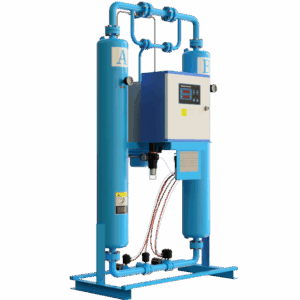

Desiccant Dryer
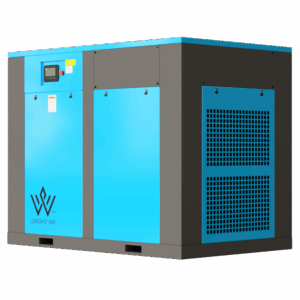
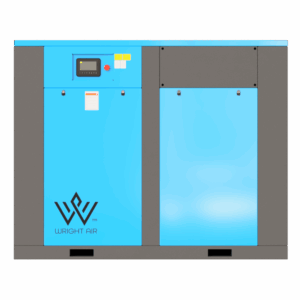
Screw Compressors
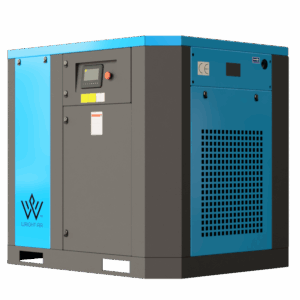

Screw Compressors
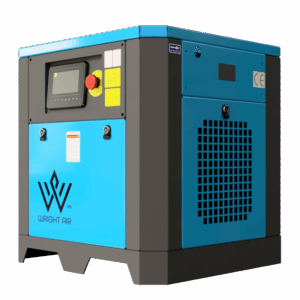

Screw Compressors

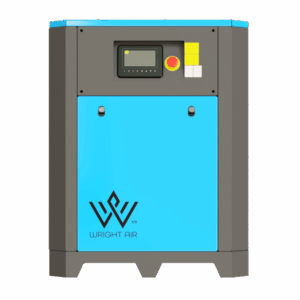
Screw Compressors